

5 Signs Your Indoor Air Quality Is Making You Sick
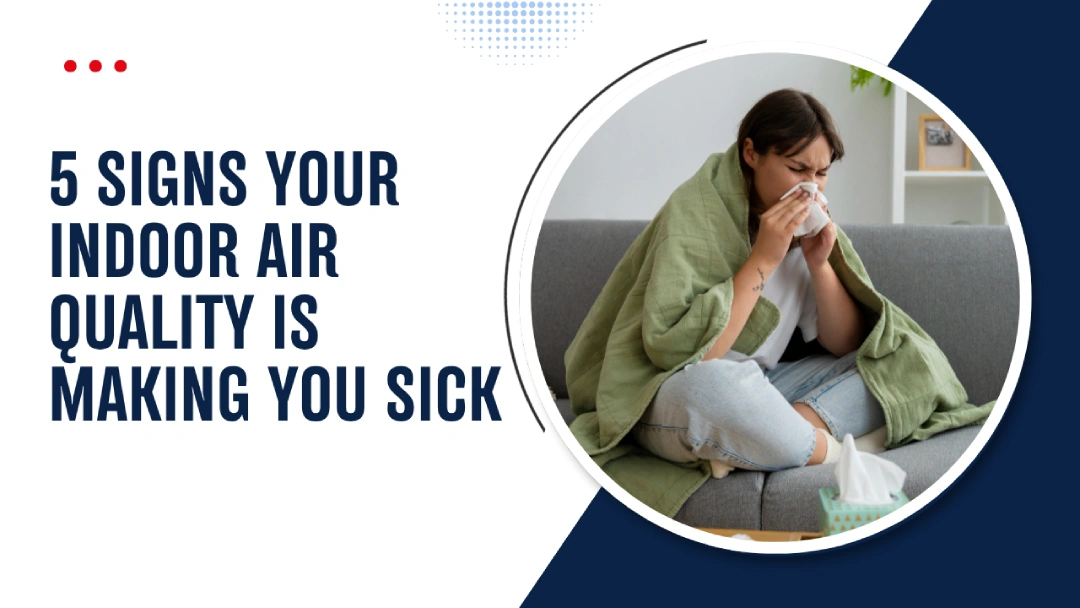

You spend most of your life indoors. Between work, sleep, and everything in between, the average person spends about 90 percent of their time inside, according to the National Institute of Environmental Health Sciences. That means the air circulating through your home matters a lot more than most people realize.
The tricky part is that poor indoor air quality rarely announces itself. There is no alarm that goes off when your ducts are full of dust or your HVAC system is circulating allergens through every room. Instead, it shows up as symptoms that are easy to blame on something else: a cold that will not go away, allergies that seem worse than usual, or a house that just never feels quite right.
Here are five signs your indoor air quality might be the real problem, and what you can do about each one.
1. You Wake Up With Headaches or Feel Foggy All Day
If you regularly wake up with a headache, or find yourself dragging through the afternoon even after a full night of sleep, your air could be part of the equation. The EPA lists headaches, dizziness, and fatigue among the most common short term effects of poor indoor air quality, and notes that these symptoms are often mistaken for a cold or a bug going around because they show up and fade in a similar way.
The pattern to watch for is timing. If your headaches or fatigue ease up when you are away from home for a few days, like on a trip or staying somewhere else, that is a strong clue that something in your house, not your body, is the trigger.
2. Your Allergies Are Worse Indoors Than Outdoors
Most people assume allergies are an outdoor, seasonal problem. In reality, a huge share of allergy triggers live inside your home. Dust mites alone affect eight out of ten people in the United States, and pet dander affects six out of ten, according to the Asthma and Allergy Foundation of America. These allergens settle into carpets, furniture, and ductwork, then get stirred back into the air every time your HVAC system kicks on.
If sneezing, watery eyes, or a stuffy nose seem to get worse when you are home and ease up when you leave, your ducts and air filtration setup are worth a closer look. The American Lung Association notes that most dust mite exposure happens during sleep, since mattresses and bedding are prime nesting spots, which is why mornings tend to be the roughest time of day for people sensitive to them.
3. Someone in the House Has Frequent Asthma Flare Ups
Asthma and indoor air quality are closely linked. The CDC points to dust mites and mold as two of the most common indoor asthma triggers, and recommends controlling indoor humidity and moisture as a core part of managing attacks (CDC). The EPA adds that dust mite exposure can trigger asthma even in children who have never shown symptoms before (EPA).
If flare ups seem to cluster around certain rooms, or happen more after the AC or heat has been running for a while, your ductwork could be redistributing the exact allergens that are setting things off. A whole home approach, cleaning the ducts themselves rather than just changing the filter, tends to make a bigger difference here than filter swaps alone.
4. You Notice a Musty or Stale Smell That Will Not Go Away
Smell is one of the most reliable early warning signs of an indoor air problem. A persistent musty odor, especially one that gets stronger when the HVAC system is running, usually points to mold or bacteria growth somewhere in the system. This is common in humid climates and in homes where ductwork has never been cleaned or sanitized.
Mold does not need to be visible to affect your air. It can grow inside ducts, around coils, or in areas with trapped moisture, then release spores that circulate through every vent in the house every time the system runs. Fixing leaks quickly and keeping indoor humidity below 50 percent are two of the most effective ways to prevent this kind of growth, according to CDC guidance on mold control (CDC).
5. Your HVAC System Runs Constantly but the Air Never Feels Fresh
If your system seems to be working overtime, running longer cycles than it used to, but the air in your home still feels stale or heavy, that is often a sign of restricted airflow. Dust and debris buildup inside ducts forces your system to work harder to push air through, which can reduce efficiency, drive up energy bills, and leave rooms feeling stuffy no matter how long the AC runs.
This is one of the more overlooked signs, because most homeowners chase it as an HVAC performance issue rather than an air quality one. In reality, the two are connected. A system straining against clogged ductwork is also pushing whatever is trapped in that ductwork, dust, dander, and other buildup, right back into your living space.
What to Do If This Sounds Familiar
None of these signs on their own prove that your air ducts are the culprit. Symptoms like headaches and fatigue can have plenty of other causes, and it is worth ruling out other explanations first. But if you are noticing two or three of these patterns together, especially ones tied to being at home specifically, your ductwork is a reasonable place to start looking.
A few things worth checking before calling in a professional:
- When was the last time your air ducts were cleaned? Most homes go years, sometimes since the house was built, without ever having this done.
- Do you have pets, recent renovations, or ongoing allergy issues in the household? All three tend to speed up buildup inside ductwork.
- Has your home ever had a water leak, flooding, or a period of high indoor humidity? These are common starting points for mold growth inside HVAC systems.
If the answer to any of these is yes, a professional duct inspection is a reasonable next step. A thorough cleaning removes built up dust, dander, and debris at the source, rather than just filtering what is already circulating.
How Patriot Air Can Help
At Patriot Air, we inspect your ductwork before we recommend anything, so you know exactly what is going on before any work begins. Our residential duct cleaning and sanitizing services are built specifically to address the kind of buildup that leads to the symptoms above, allergens, dust, and mold sources hiding in a part of the home most people never see.
If any of these five signs sound familiar, call us at (512) 883-2555 for a free, no obligation quote. We serve Austin and the surrounding area, and we will always tell you honestly whether duct cleaning is likely to help before we ask you to schedule anything.